
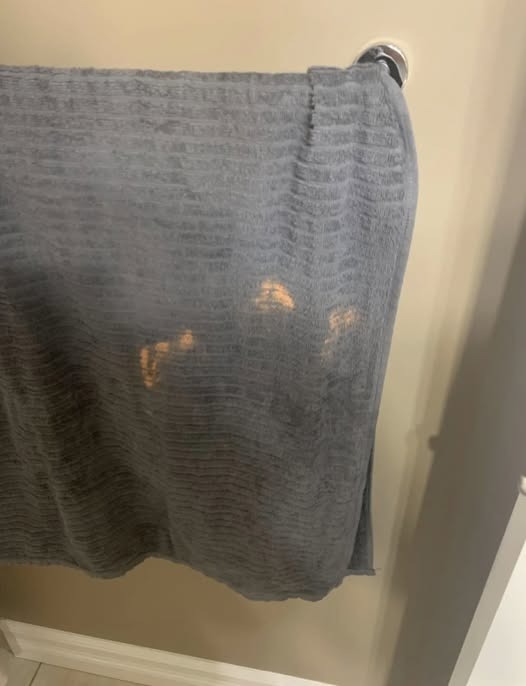
You wash your towels regularly, use quality detergent, and still—mysterious orange or pink stains keep appearing, clinging stubbornly no matter how many times you rewash them. They’re not rust, not mildew, and definitely not from your skincare products. So what gives?
The culprit? Serratia marcescens—a naturally occurring airborne bacteria that thrives in damp, humid environments like bathrooms. And before you panic: it’s usually harmless for healthy people, but it is unsightly, persistent, and a sign your bath linens need a little extra care.
The good news? You can stop these stains for good—without bleach, harsh chemicals, or replacing your entire linen closet. Let’s uncover the science behind those orange spots and how to keep your towels fresh, fluffy, and stain-free.
 What Causes Those Orange/Pink Stains?
Despite the rust-like appearance, these stains are biological, not mineral-based. They’re caused by Serratia marcescens, a pinkish-red bacterium commonly found in:
- Soil
- Dust
- Bathrooms (especially on tiles, grout, and shower curtains)
- Humid air
This bacteria feeds on fats, phosphates, and minerals found in:
- Soap scum
- Shampoo residues
- Body oils
- Fabric softener buildup
When your damp towels sit bunched up in a hamper or stay wet for hours, Serratia multiplies—leaving behind that telltale orange-pink biofilm that regular washing won’t remove.
 Why Normal Washing Doesn’t Work
- Cold water doesn’t kill the bacteria.
- Standard detergents don’t break down the biofilm.
- Fabric softeners coat fibers, trapping residue and moisture—creating the perfect breeding ground.
- Overloading the washer prevents proper rinsing and agitation.
The bacteria embeds deep into fibers, and without the right treatment, it just keeps coming back.
 How to Remove Orange Stains—For Good
Step 1: Strip the Towels
Remove residue and kill bacteria with a deep clean:
- Fill your bathtub or top-loading washer with hot water.
- Add:
- ½ cup washing soda (not baking soda!)
- ½ cup Borax (or oxygen bleach like OxiClean)
- 1 tbsp laundry detergent
- Submerge towels. Soak for 4–6 hours (or overnight).
- Wash as usual in hot water, then dry on high heat.
No harsh bleach needed: This method is safe for colors and septic systems.
Step 2: Prevent Buildup Going Forward
- Wash towels in warm/hot water every 2–3 uses.
- Skip fabric softener—it reduces absorbency and traps bacteria. Use ½ cup white vinegar in the rinse cycle instead (it softens and disinfects).
- Don’t overload the machine—towels need room to agitate and rinse clean.
- Dry completely within 1 hour of use—hang to air-dry if you’re not washing right away.
Step 3: Sanitize Your Bathroom
- Spray shower walls, grout, and sink with a vinegar-water (1:1) or hydrogen peroxide solution weekly.
- Replace loofahs and washcloths often—they harbor bacteria too.
- Run the bathroom fan during and after showers to reduce humidity.
 What Not to Do
READE MORE
ADVERTISEMENT
