
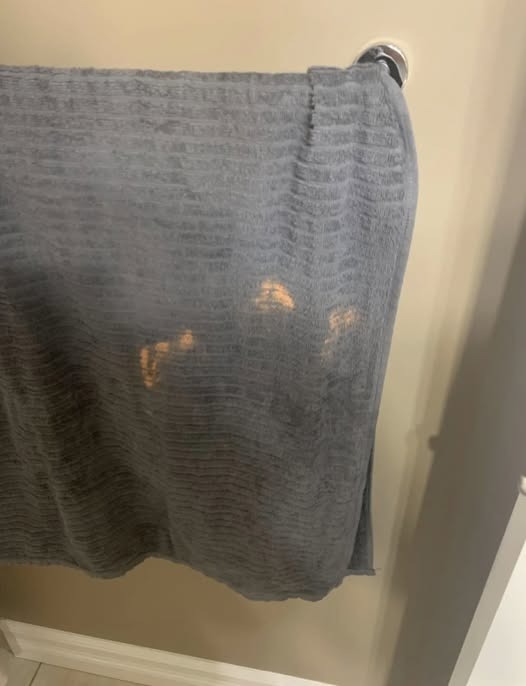
 What Not to Do
- Don’t use chlorine bleach on orange stains—it can react with minerals and set the stain.
- Don’t store damp towels in a closed hamper—opt for a ventilated one or hang them to dry first.
- Don’t ignore the problem—bacteria buildup can worsen and spread to other linens.
 Bonus: Keep Towels Fresh Between Washes
- After use, hang towels fully spread over a bar (not bunched on a hook).
- Wash bath mats weekly—they’re a hidden bacteria hotspot.
- Rotate towels so none stay damp for more than a day.
Frequently Asked Questions
Q: Are these stains dangerous?
A: For most people, no—Serratia is opportunistic and rarely affects healthy individuals. However, those with weakened immune systems should take extra precautions.
Q: Can I use baking soda instead of washing soda?
A: No—washing soda (sodium carbonate) is a stronger cleaner and water softener. Baking soda (sodium bicarbonate) won’t cut through biofilm as effectively.
Q: Will this work on washcloths and bath mats too?
A: Yes! Treat all bath linens the same way.
Q: My towels are white—can I use bleach now?
A: Only after removing the biofilm. Bleach won’t kill Serratia if it’s protected by residue—and can yellow fibers over time.
Final Thought: Fresh Towels Start with Smart Habits
Orange towel stains aren’t a reflection of poor hygiene—they’re a common issue caused by invisible bacteria in humid spaces. But with a few simple changes to your laundry and bathroom routine, you can keep your towels bright, fresh, and truly clean.
So skip the fabric softener, embrace the vinegar, and give those towels the deep clean they deserve. Your future (stain-free) self will thank you.
Tried these tips and banished the orange spots? Share your success in the comments! And if someone you know is battling mystery stains, send them this guide—they’ll finally get the fre
ADVERTISEMENT
